Jungian Archetypes: What Jung Meant, and What He Never Said
No list of twelve, no archetype quiz: the idea as he wrote it, and the figures he actually described
8 min read · Updated 28 November 2026
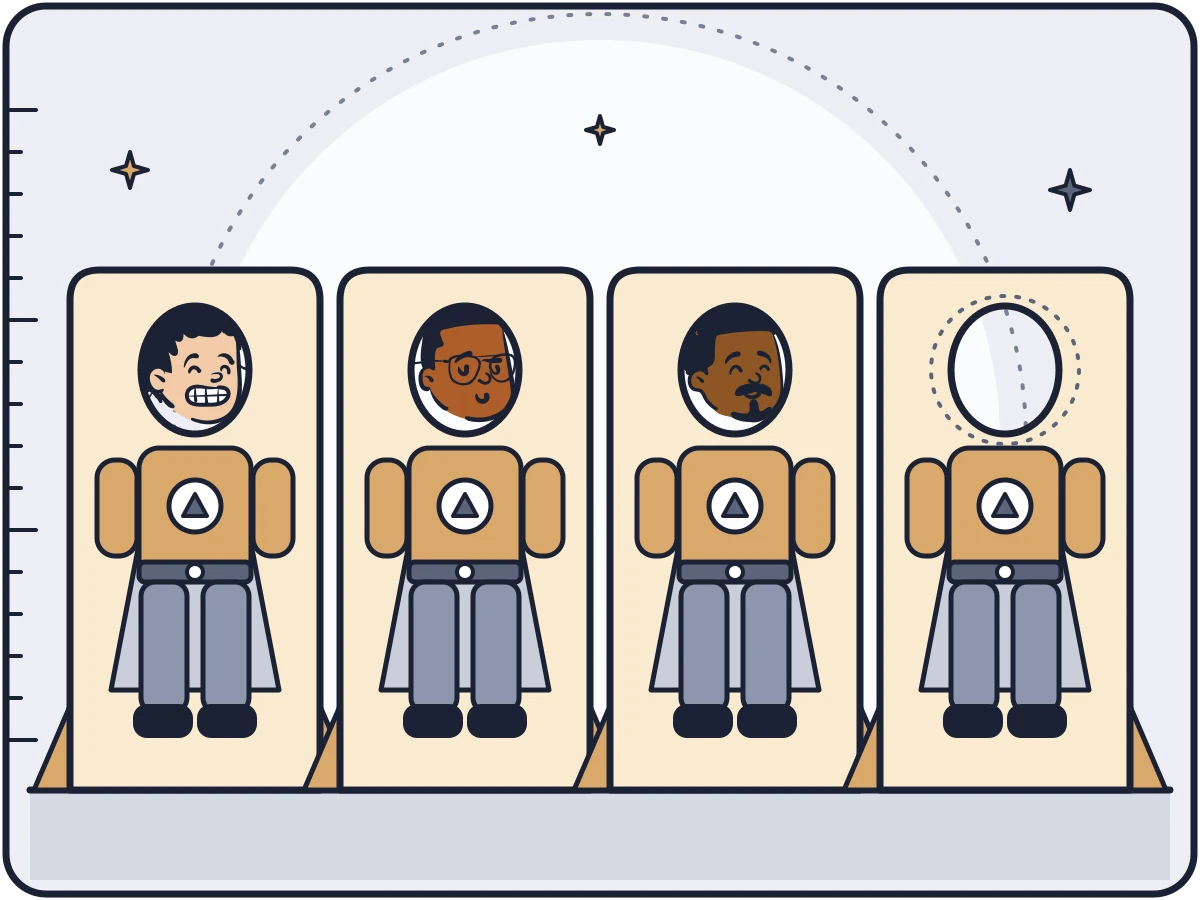
Tomás, 24, is three weeks into a marketing internship when his manager shows a slide: “Our brand is The Explorer.” That evening his friend Ana says she is “such a Caregiver”. Tomás searches for “Jungian archetypes” and finds two different worlds, one of brand decks and quizzes, one of Carl Jung’s own odd, careful writing.
They are not the same thing. This page explains what Jung meant, with paragraph numbers, lists the figures he actually wrote about, says where the famous twelve come from, and answers “what is my Jung archetype” honestly. If you want a Jung-based self-reflection, our test is built on something else, which we explain at the end.
What is an archetype according to Jung?
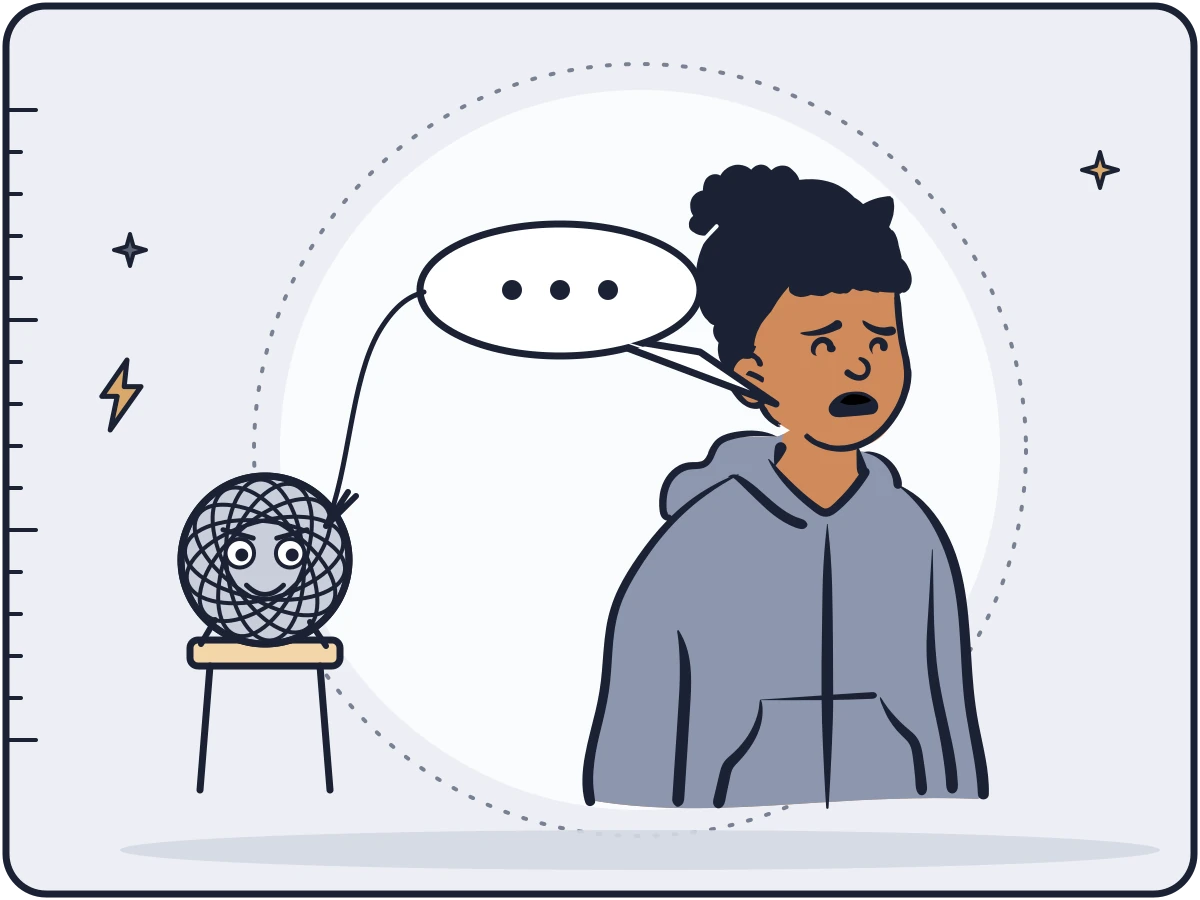
An archetype, for Jung, is an inherited form that shapes how people picture and respond to typical situations. It is a template, not a character. The thing you can see, a figure in a dream or a hero in a film, is an archetypal image. The archetype behind it, he said, is unconscious.
“The archetype in itself is empty and purely formal”
He compared it to the axial system of a crystal. The axes decide the pattern the crystal will take, but they have no material existence of their own, and the actual crystal forms from whatever is in the liquid (CW 9i §155). What gets passed on, he wrote, is the form only, not the pictures: “the representations themselves are not inherited”.
That is also why there is no fixed number. Jung wrote that there are as many archetypes as there are typical situations in life, and that over time they were engraved into us as forms without content, only the possibility of a certain kind of perception and action (CW 9i §99). When a situation matches one, it is activated, and a compulsiveness appears that, like an instinct, can push against reason and will.
Think of arriving as the new hire. Everyone knows the shape of that situation: the careful smile, the fear of the wrong question. Each person fills it with their own details. In Jung’s terms the shape is the archetype, and your first week is its content.
Did Jung give a list of archetypes?
No. He said the opposite. Writing about the shadow and the anima, he remarked that merely knowing about them is not enough, and that it is of no use to learn a list of archetypes by heart.
“It is no use at all to learn a list of archetypes by heart”
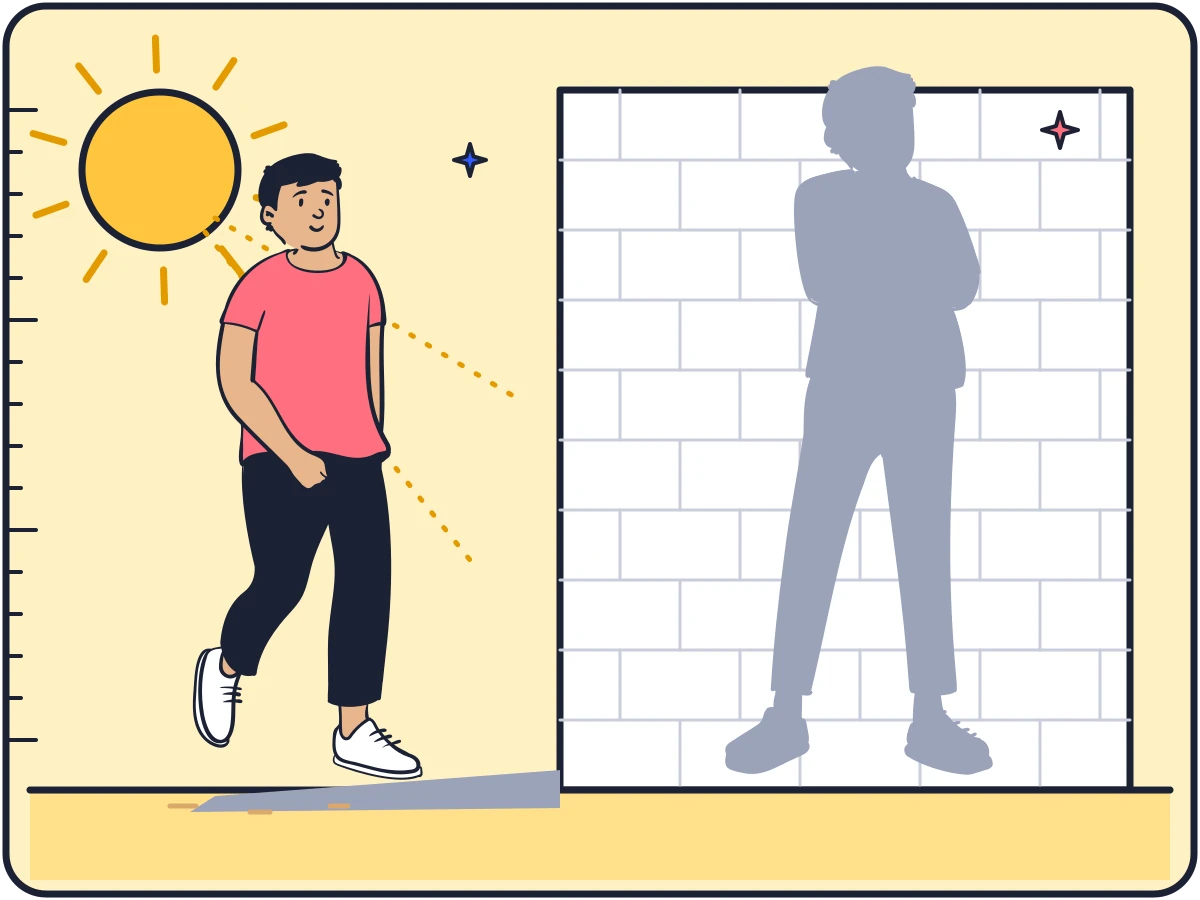
He did name the human figures he met most often in dreams, fantasies and myths. In his essay on the Kore figure he listed the chief ones as the shadow, the wise old man, the child, the mother and her counterpart the maiden, and the anima in men and animus in women. Then he added that these are far from exhausting the regularities he had seen (CW 9i §§309-310).
The IAAP’s short article on the archetype, by the Jungian analyst Patricia Berry, makes the same point: Jung used the idea in different ways at different times, and there is no closed list. “There are many possibilities”, she writes.
Which archetypes did Jung actually write about?
These are the figures he described at length. The table says where, so you can read the original. Several have their own page on this site.
| Figure | What Jung described | Where to read more |
|---|---|---|
| Shadow | The part of yourself you do not see or will not own. | CW 9ii §§13-19. Our shadow article. |
| Persona | The social role, which he called a kind of mask. Often listed with archetypes, but his own definition is about society. | CW 7 §305. Our persona article. |
| Anima and animus | The figure he said stands for the “other” in one’s own psyche. It is the most contested part of his theory, and we do not use it as a personality label. | CW 9ii §§20-42; CW 9i §§111-147. |
| Self | The whole psyche and its centre, as opposed to the ego as the centre of consciousness. | CW 9ii §§43-67. Our self article. |
| Mother | A figure behind our images of the maternal. | CW 9i §§148-198. |
| Child | Beginnings, the future, the abandoned and the invincible child. | CW 9i §§259-305. |
| Wise old man | The figure of meaning and guidance, which he traced in fairy tales. | CW 9i §§384-455. |
| Trickster | The disorderly, comic figure in myth and folk tale. | CW 9i §§456-488. |
| Hero | The central motif of the 1911-12 book that split him from Freud. | Symbols of Transformation (CW 5); see Jung vs Freud. |
Notice that “hero”, “child” and “trickster” are motifs found in stories, not types of people. Jung wrote that situations repeat as much as figures do (CW 9i §309).
Where do the famous 12 archetypes come from?
Not from Jung. The popular twelve trace to the writer Carol Pearson. Her 1991 book carries “Twelve Archetypes” in its subtitle (full title in the sources), and in 2001 she co-wrote The Hero and the Outlaw with Margaret Mark, a book of archetypes for brand strategy. Brand decks like Tomás’s slide draw on this kind of list.
Look at the numbers. Pearson’s earlier book, The Hero Within (1986), has six archetypes. The count changed from book to book, which suggests the list is a design choice and not a discovery.
That does not make the lists useless. They are handy prompts for writing a character or sharpening a brand. As psychology, they are one author’s list, and Jung gave no such list.
One more thing the lists blur. The word “archetype” is much older than Jung. He notes that it appears in Philo Judaeus, in Irenaeus and in the Corpus Hermeticum, and calls it an explanatory paraphrase of Plato’s eidos (CW 9i §5). What he did was give it a psychological meaning, and he first used the term in print in 1919 (CW 8 §270, editors’ note).
Can a test tell you which Jungian archetype you are?
Jung did not sort people into archetypes, and no test can. An archetype is not a personality type. It is a form in what he called the collective unconscious, and you meet it as an image or a pull, not as a label for who you are.
Ana calling herself a Caregiver is describing a role she plays and a habit she likes in herself. In Jung’s words that is closer to persona, which is a different idea from an archetype. Our persona article shows the difference.
The one scheme Jung built for sorting people is typology: two attitudes, introversion and extraversion, and four functions, thinking, feeling, sensation and intuition. Our four functions article explains it. Our test ranks those four from the choices you make in short everyday scenes and gives you a profile and a nickname. It does not assign an archetype, and a result that did would be making something up.
How would you notice an archetype in real life?
Jung’s answer is that you rarely meet one in the abstract. He wrote that archetypes are complexes of experience that come upon us like fate, and that their effects are felt in our most personal life (CW 9i §62). The anima, his example runs, no longer crosses our path as a goddess but as an intimately personal misadventure.
Here are three things you can notice, with no theory needed. They come from our reading of his point, not from a checklist of his.
- A story that grips you out of proportion. A film, a song, a character. Ask what situation in it is familiar.
- A role that takes you over. Becoming the manager, the new parent, the one everyone leans on, and suddenly acting like a script.
- A reaction that feels bigger than you. Jung said an activated archetype can push against reason and will (CW 9i §99). That is the cue to write down what happened and check it against real moments.
The practical side overlaps with his idea of complexes, which are the personal side of the same thing. See our complexes article. If a pattern feels heavy or keeps returning, a professional is the right person to talk to.
Is the archetype idea scientific?
Jung was frank. He called the impersonal layer of the psyche no more than a hypothesis (CW 9ii §12), and he said the existence of archetypes can no more be proved than the existence of instincts, until they show themselves concretely (CW 9i §155).
Today the debate is about how the forms are passed on. In 2012 the analyst Christian Roesler argued in the Journal of Analytical Psychology that neither Jung nor later reformulations explain why complex archetypes should be universal, and proposed that culture and upbringing carry more of the load than biology.
Berry’s IAAP article takes a gentler line: the most useful way to understand archetype overall, she writes, is as a metaphor, and personified types can oversimplify and hide individuality. Read the idea as a lens, not a measurement.
What do people get wrong about Jungian archetypes?
| The popular line | What the sources say |
|---|---|
| "Jung defined 12 archetypes" | He never gave a fixed list (CW 9i §§62, 99). The twelve come from Pearson and Mark. |
| "Archetypes are images we inherit" | The forms are inherited, not the images or ideas (CW 9i §155). |
| "Your archetype is your personality type" | Jung’s typology uses attitudes and functions (CW 6). Archetypes are forms in the collective psyche. |
| "Jung invented the word" | It is much older; he says so himself (CW 9i §5). He first used it in 1919. |
| "Archetypes are settled science" | He called the idea a hypothesis (CW 9ii §12). |
More questions about archetypes
Are archetypes the same as stereotypes?
No, though the two are easily confused. A stereotype is a fixed picture of a group. An archetype, in Jung’s sense, is an empty form that can be filled in countless ways. Berry’s caution is that personified types can slide into stereotype if you read them literally.
What is the difference between an archetype and a complex?
A complex is a personal cluster built from your own experiences. In Jung’s definition of the two unconscious layers, the personal one consists mostly of complexes and the collective one of archetypes (CW 9i §88).
Is the shadow an archetype?
Jung put it first among the chief figures (CW 9i §309), and in Aion he treats the personal shadow and a deeper archetypal shadow as different levels (CW 9ii §19). The shadow article explains the difference.
Sources
- C. G. Jung, The Archetypes and the Collective Unconscious (Collected Works vol. 9 part 1, Hull translation): “Archetypes of the Collective Unconscious” §§5, 62; “The Concept of the Collective Unconscious” §§88, 99; “Concerning the Archetypes” §155; “The Phenomenology of the Spirit in Fairytales”; “Psychological Aspects of the Mother Archetype”; “The Psychology of the Child Archetype”; “On the Psychology of the Trickster-Figure”; “The Psychological Aspects of the Kore” §§309-310
- C. G. Jung, Aion (CW 9 part 2) §§12, 13-19, 20-42, 43-67
- C. G. Jung, The Structure and Dynamics of the Psyche (CW 8), “Instinct and the Unconscious” §270 and editors’ note
- C. G. Jung, Two Essays on Analytical Psychology (CW 7) §305
- Patricia Berry, “Archetype”, short articles on analytical psychology, International Association for Analytical Psychology
- Christian Roesler, “Are Archetypes Transmitted More by Culture than Biology? Questions Arising from Conceptualizations of the Archetype”, Journal of Analytical Psychology 57(2), 2012, pp. 223-246
- Carol S. Pearson, Awakening the Heroes Within: Twelve Archetypes to Help Us Find Ourselves and Transform Our World (1991); The Hero Within: Six Archetypes We Live By (1986); Margaret Mark and Carol S. Pearson, The Hero and the Outlaw (McGraw-Hill, 2001): cited only to show where the popular lists come from