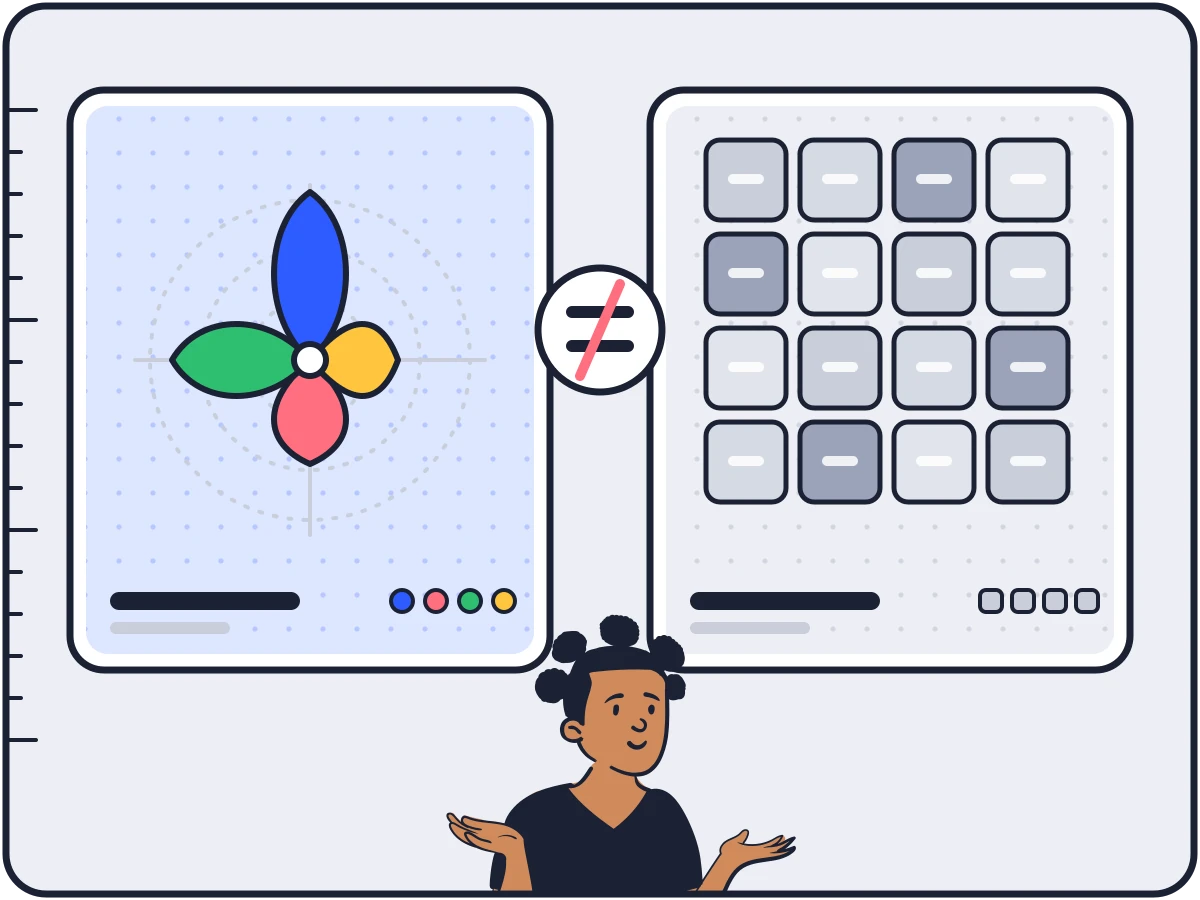
Jung vs Freud: What Actually Split Them?
A fair side-by-side, the dates of the break, and what each man wrote about the other
9 min read · Updated 28 November 2026
Priya, 24, tells her group chat about a dream: her new flat floods the night before she signs the lease. One friend says, “That’s your mum, obviously.” Another says, “No, your mind is telling you to slow down.” Without knowing it, they are arguing about a break between two men that happened more than a century ago.
Sigmund Freud and Carl Jung were close from 1907 to 1912, then stopped speaking. This page gives the dates, puts their ideas side by side in their own words, and fixes the popular version. Jung’s types, which our test draws on, grew out of the split, and we explain how below.
Why did Jung and Freud split?
There was no single cause. The textbook answer is that Jung would not treat libido as purely sexual, and he said so in a book published in 1911 and 1912. That is true, but religion, authority and personal trust ran through it too, and each man afterwards explained the break by the other’s character.
Here is the sequence, from Freud’s own 1914 account, Jung’s recollections and the editors of Jung’s Collected Works.
- 1906. Jung sends Freud his Studies in Word Association, the research he had been running at the Burghölzli clinic in Zurich since the early 1900s.
- March 1907. They meet in Vienna. Jung recalled that they talked for about thirteen hours.
- 1908 to 1909. Freud’s circle holds its first congress at Salzburg, at Jung’s invitation. In 1909 both men are invited to Clark University in Massachusetts and travel there together.
- March 1910. At Nuremberg the International Psychoanalytical Association is founded and Jung is elected president. Freud later wrote that he had wanted Jung to take his place one day.
- 1911 and 1912. Jung publishes the two parts of Wandlungen und Symbole der Libido (later Symbols of Transformation). The second part contains his chapter on the concept of libido.
- 1913. Freud writes to Jung proposing that they end their personal relations entirely. The Library of Congress holds a page of the letter.
- 1914. Jung’s time as president of the association ends. Freud publishes his own account of the movement, aimed partly at Jung and at Alfred Adler.
The scholar Ora Gruengard, writing in Science in Context in 1998, notes that both men answered the other’s objections by analysing the objector’s whole personality. That habit makes the split hard to read as a clean argument about evidence.
What is the difference between Jung and Freud, side by side?
Both men were doctors building theory from case work, and most of what follows is theory, not tested fact. Where a cell cites one man’s description of the other, the cell says so.
| Topic | Freud | Jung |
|---|---|---|
| Libido | Psychic energy of the sexual drive. In his 1914 account, giving up the sexual theory meant leaving analysis. | A general life energy, of which sexuality is one form (CW 8 §§32, 54-56). |
| The unconscious | Built around repression: what the conscious mind cannot accept (Jung’s summary, CW 8 §212). | A personal layer of forgotten and repressed material, plus a collective layer of inherited forms called archetypes (CW 9i §88). |
| Dreams | Wish-fulfilling and sleep-protecting, with a hidden meaning behind the surface (Jung’s summary, CW 8 §§449, 487). | Compensatory: they answer the conscious situation of the moment (CW 8 §487). |
| Religion | Wrote The Future of an Illusion. Jung said it showed Freud could not understand religious experience (CW 4 §773). | Took religions seriously as psychology: their symbols match figures in his patients’ dreams (CW 4 §777). |
| Reading a symptom or image | Trace it back to earlier causes (Jung calls this reductive, CW 8 §146). | Do that, and also ask what it is aiming at, its purpose (CW 8 §§146-148). |
| How well tested | Built from clinical cases. Jung granted that Freud found the meaning of dreams empirically, not by deduction (CW 8 §449). | Built from cases and the association experiments. He called the collective unconscious “no more than a hypothesis” (CW 9ii §12). |
Was it really about sex? Libido in both men's words
Libido is Latin for desire. Freud used it for the energy of the sexual drive. Jung argued, in an essay begun around 1912 and published in 1928, that this is too narrow for a general theory of the mind, since psychic energy cannot be explained by one specific drive (CW 8 §54).
He was gracious about Freud’s priority. He wrote that the concept merited the name libido, if only for reasons of historical justice, because Freud was first to work out these dynamics (CW 8 §54).
His own use was wider. A footnote says the Latin word has “by no means an exclusively sexual connotation”, and means desire, longing, urge (CW 8 §56, n. 47). In his 1912 New York lectures he put it more sharply.
“nothing for it but to abandon the sexual definition of libido”
Jung did not say sex was unimportant. In 1929 he wrote that he wanted to set bounds to the rampant terminology of sex, and that he never meant to deny sexuality’s importance, though Freud maintained he did (CW 4 §779).
Freud saw it differently. In 1914 he wrote that Jung had replaced the sexual libido with “an abstract idea”, and compared Jung’s changes to the famous knife of Lichtenberg: new hilt, new blade, same trademark. His view was that the result was no longer psychoanalysis.
How is Jung's idea of the unconscious different from Freud's?
Start with what Jung gave Freud. He wrote that Freud became the real discoverer of the unconscious in psychology, because he looked into the dark places instead of dismissing them (CW 8 §210).
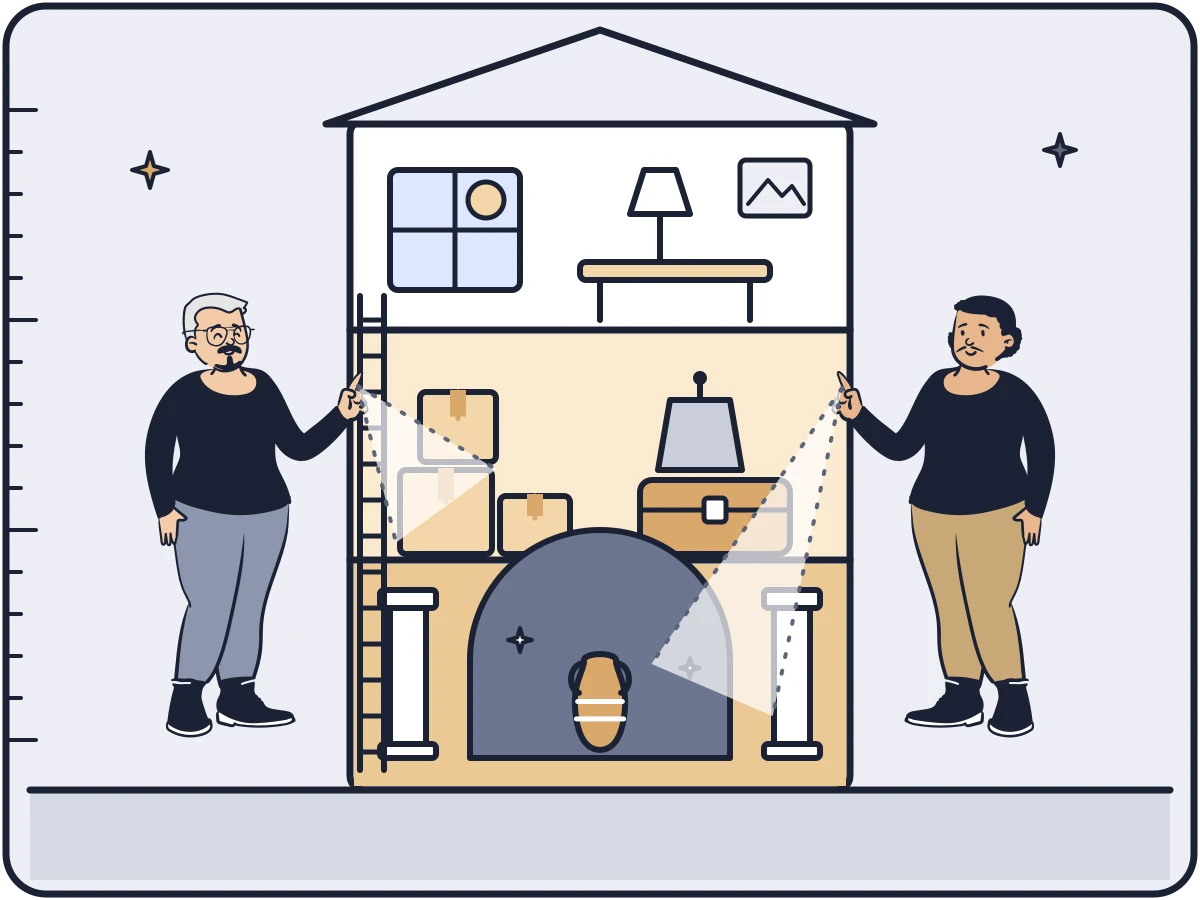
Jung’s difference is the second layer. In his definition, the personal unconscious holds what was once conscious and has been forgotten or repressed, and it consists mostly of complexes. The collective unconscious holds contents that were never in consciousness, which he said come from heredity, and it consists mostly of archetypes (CW 9i §88). Our articles on complexes and archetypes take each in turn.
This is where Jung is most open to doubt, and he said so. In his own words the idea of an impersonal layer is “no more than a hypothesis” (CW 9ii §12). Whether the forms are inherited is still argued among Jungians today (Roesler, 2012).
Did they read dreams differently?
Yes, and Jung began with praise again. He called Freud’s work the first successful attempt in practice to find a dream’s real significance (CW 8 §447). Then he disagreed about what a dream is for.
“Dreams, I maintain, are compensatory to the conscious situation of the moment”
He thought Freud’s view, that dreams fulfil wishes and protect sleep, was too narrow. He also rejected the idea that the dream is a front for a hidden text. His line is that the manifest dream is “the dream itself” (CW 16 §319).
Back to Priya’s flood. A Freudian-style question would reach back: what earlier experience, or what wish, does this recall? A Jungian-style question would stay with the present: what is her waking attitude to signing that lease, and what might the dream be balancing?
We are describing two theories here, not reading anyone’s dream. Jung himself said the first task with a dream is not to interpret but to establish its context with care (CW 16 §319).
What did they argue about on religion and the occult?
Jung dated the real break in trust to a conversation in Vienna in 1910. In Memories, Dreams, Reflections he reports Freud asking him never to abandon the sexual theory.
“we must make a dogma of it, an unshakable bulwark”
Against what, Jung asked. The answer he gives is “the black tide of mud”, then, after a pause, “of occultism”. To Jung that sounded like a man setting up a dogma to silence doubt, which is not how he thought science should work.
Two cautions. This is Jung’s recollection decades later, in a book assembled with his collaborator Aniela Jaffé, and Sonu Shamdasani has argued that it is not a plain autobiography. And Freud’s side exists too. In 1914 he wrote that Jung’s changes aimed at setting aside what is objectionable in the family complexes, so that it “may not be found again in religion and ethics”.
In 1929 Jung’s verdict on Freud was that both Freud and Adler overstressed what is sick in people, and that Freud could not grasp religious experience (CW 4 §773). Of their first meeting he later admitted that Freud was right to say he lacked the experience to argue back (Memories, Dreams, Reflections, ch. V).
Where did Jung and Freud agree?
More than the feud suggests.
- The unconscious is real and shapes behaviour. Jung’s complex theory started from Freud’s ground, and Freud’s 1914 text says the word “complex” gained “the right of citizenship” in psychoanalysis.
- Dreams and symptoms mean something. Jung wrote that Freud’s method gave the first real hold on this (CW 8 §447).
- Jung’s own experiments pointed the same way. He recalled that his association experiments agreed with Freud’s theories, and that he then became an open defender of Freud. The word association article shows the experiments.
Jung also never gave up the claim that he was no enemy. He wrote in 1929 that he was “no opponent of Freud’s” and that he was merely cast as one by Freud’s short-sightedness and that of his pupils (CW 4 §772).
Did the split lead to Jung's four functions?
By Jung’s own account, yes. In a passage quoted in the editors’ note to Psychological Types, he said the book began with his need to define how his outlook differed from Freud’s and Adler’s, and that this led him to types.
His answer was that a theorist’s psychology partly reflects the theorist’s own type. In Psychological Types he called Freud’s view essentially extraverted and Adler’s introverted, and said both were one-sided and true to one type (CW 6 §§91-92). That is Jung’s hypothesis about the two men, not a diagnosis, and it is the habit Gruengard describes: explaining a rival’s position by his type.
Jung went further in 1929. He wrote that Freud’s account of sexuality could be taken as the truest expression of Freud’s own personal psychology (CW 4 §772), and that every psychology, his own included, has the character of a subjective confession (CW 4 §774).
The functions our test measures, thinking, feeling, sensation and intuition, come from that later work, so see the four functions for them. The test says nothing about libido or about who was right.
Who was right, and what do you take from it?
This page cannot settle it, and we would not trust one that did. Neither man tested his core claims the way a modern experiment would, and each was working from the cases and the temperament he had.
What you can take is practical. When a friend says “that’s your mum” or “that’s your psyche”, both are hypotheses, and both ask you to check against real life. Priya can do the same thing either theory would ask of her: write down what actually happened that week, then see which reading fits it.
What do people get wrong about Jung and Freud?
| The popular line | What the sources say |
|---|---|
| "Jung said libido is not sexual" | He said it is not only sexual, and that he did not deny sexuality (CW 4 §779; CW 8 §56). |
| "Jung was Freud's student" | Jung had been running association experiments in Zurich since the early 1900s and sent Freud his results in 1906. He was a colleague who became a close ally. |
| "Jung discovered the unconscious, Freud only studied sex" | Jung wrote that Freud was the real discoverer of the unconscious in psychology (CW 8 §210). |
| "Freud threw Jung out" | Freud proposed ending their personal relations in 1913. Jung stayed president of the association until 1914. |
| "The collective unconscious is established science" | Jung called it “no more than a hypothesis” (CW 9ii §12). |
More questions about Jung and Freud
Did Freud choose Jung as his successor?
By Freud’s own 1914 account, yes. He wrote that he felt his successor “could be only C. G. Jung”, because of his talent and his energy. In the same text he calls the choice a very unfortunate one.
Which one is more scientific?
Neither theory is a laboratory result. Jung’s association experiments were real experiments, and his typology is a hypothesis. Freud’s method was an attempt at a science of dreams and symptoms, and Jung wrote that it merits the word “scientific” because it is a technique others can apply (CW 8 §447).
Do you need to know Freud to understand Jung?
A little helps. Jung’s ideas on complexes and projection start from Freud’s, and his differences make most sense once you know what he was disagreeing with. For a gentle start, read our shadow article first.
Sources
- C. G. Jung, Freud and Psychoanalysis (Collected Works vol. 4, Hull translation): editorial note; “The Theory of Psychoanalysis” §§269-271; “Freud and Jung: Contrasts” §§768-780
- C. G. Jung, The Structure and Dynamics of the Psyche (CW 8): “On Psychic Energy” §§32, 54-56; “A Review of the Complex Theory” §§210-212; “General Aspects of Dream Psychology” §§447, 487
- C. G. Jung, The Archetypes and the Collective Unconscious (CW 9 part 1) §88; Aion (CW 9 part 2) §12
- C. G. Jung, The Practice of Psychotherapy (CW 16), “The Practical Use of Dream-Analysis” §319
- C. G. Jung, Psychological Types (CW 6): editorial note and §§91-92
- C. G. Jung and Aniela Jaffé, Memories, Dreams, Reflections (Winston translation), ch. V “Sigmund Freud”
- Sigmund Freud, The History of the Psychoanalytic Movement, trans. A. A. Brill (1917, public domain)
- Library of Congress, “Page from Freud’s Letter to Jung” (1913)
- Ora Gruengard, “Introverted, Extroverted, and Perverted Controversy: Jung Against Freud”, Science in Context 11(2), 1998
- Christian Roesler, “Are Archetypes Transmitted More by Culture than Biology?”, Journal of Analytical Psychology 57, 2012, pp. 223-246
- Sonu Shamdasani (ed.), Jung’s Life and Work: Interviews for Memories, Dreams, Reflections with Aniela Jaffé (Princeton University Press)
- William McGuire (ed.), The Freud/Jung Letters (Princeton University Press, 1974), for the full correspondence 1906 to 1914