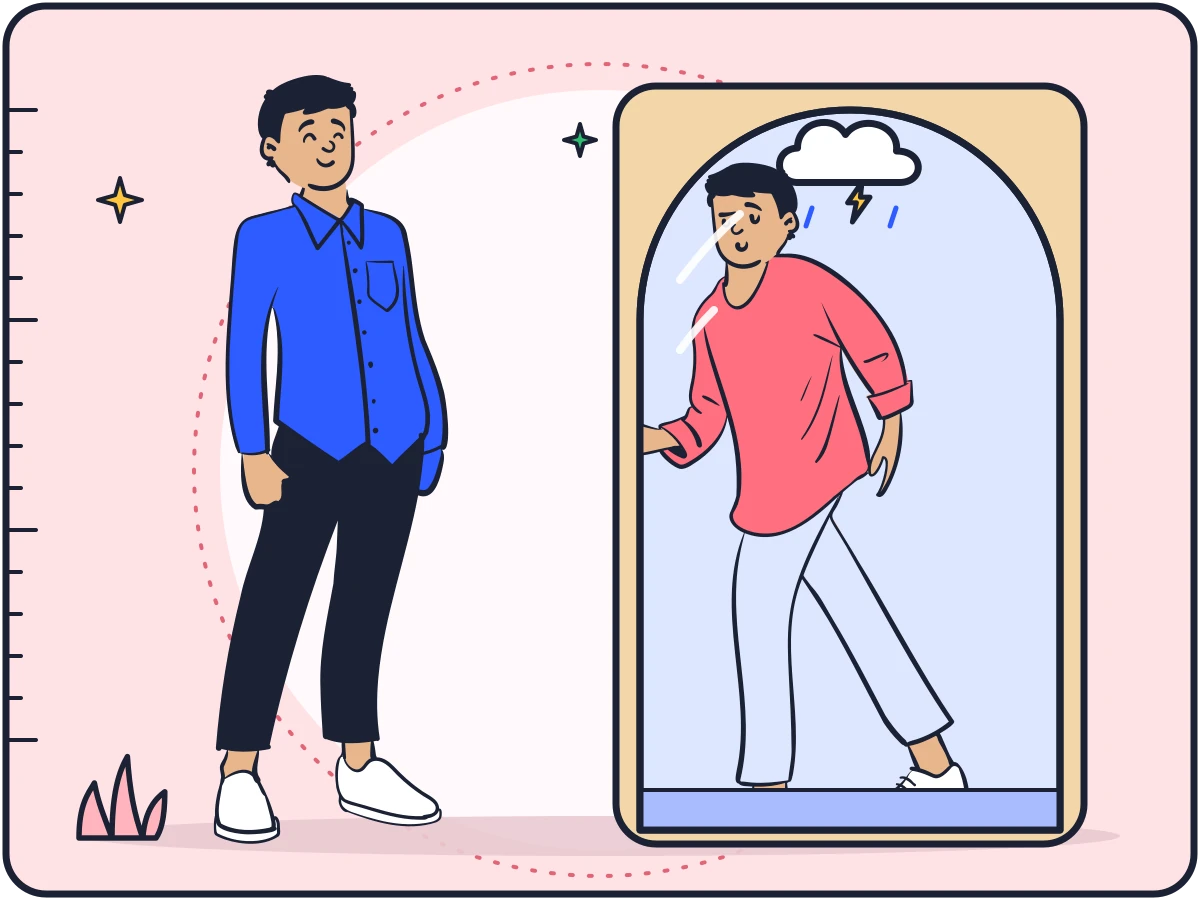
Introverted and Extraverted Sensation in Jung: Two Ways of Noticing
Sensation is perception through the senses, and Jung's two sensation types see the same room very differently
6 min read · Updated 28 November 2026
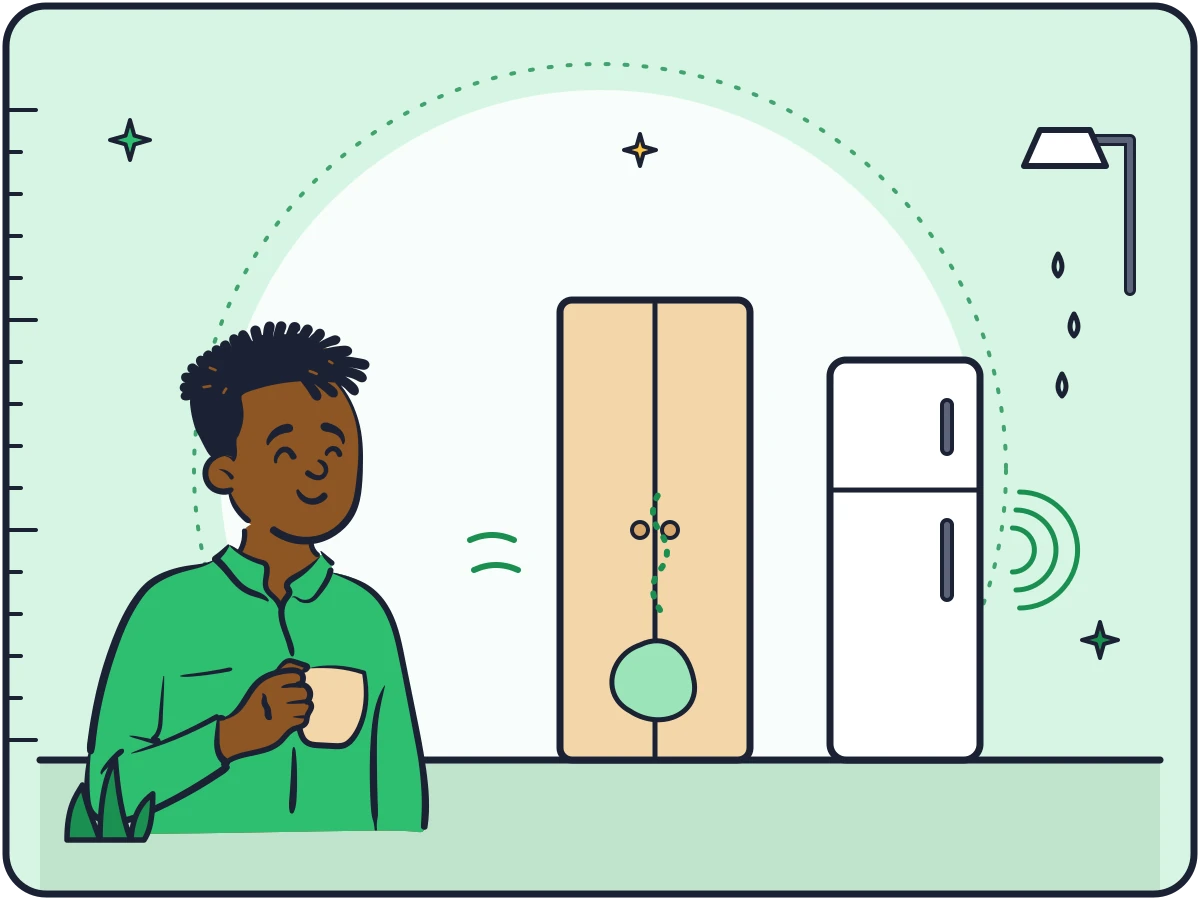
Jonas is viewing his first flat. His friend says the light is lovely. Jonas has already noticed the damp smell behind the wardrobe, the hum of the fridge and the weak shower pressure.
Carl Jung called this way of meeting the world sensation, and he described two quite different versions of it. This page sets them out in his own words, with paragraph numbers from Psychological Types, and checks them against what the sensing pages say online. If you would rather see how you describe your own habits of noticing, the test takes about 6 minutes, has no sign-up and gives a free result.
What does sensation mean in Jung's psychology?
Sensation is perception through the senses. Jung defines it as “the psychological function that mediates the perception of a physical stimulus” (CW 6 §792), and he adds that it covers stimuli from inside the body as well as outside. Of the four functions, it is the one that tells you “what is actually present” (§958).
It is a perceiving function, not a judging one. Jung calls sensation and intuition “irrational”, which in his usage means “something beyond reason”, not something contrary to it (§774). A sensation type is guided “simply by what happens”, not by a verdict about it (§650).
If you are new to the four functions, start with Jung’s four functions. Here we stay with sensation and its two forms.
Is a sensation type just a practical, down-to-earth person?
Not quite, and Jung’s portrait is odder than the label. Of the extraverted kind he writes that “No other human type can equal the extraverted sensation type in realism” (CW 6 §606). But he also says that the more pronounced the type, “the less use does he make of his experience” (§606), because each experience mostly serves as a pointer to the next fresh sensation.
The introverted kind is even less like the stereotype. Jung says it can look calm, even “conspicuous for his calmness and passivity” (§650), while a strong private reaction goes on underneath. Practical, in the sense of getting things done, is not the definition for either form.
Jung also warned against reading sensation as dull or limited. A sensation type may bring the sense of detail “to the finest pitch of aesthetic purity” (§606). Noticing is a skill, and it can be developed far.
What does extraverted sensation look like on an ordinary Sunday?
Picture Jonas a month later, hosting his first flat party. He has the speakers right, the food on time and a good sense of who needs a drink. In Jung’s terms this is extraverted sensation: attention turns to the objects and people in front of him, and the best moments are the vivid ones.
Jung’s summary is that for this type, sensation is “real life lived to the full” (CW 6 §606). He adds that such a person is “very good company” because of a “lively capacity for enjoyment” (§607). The aim is concrete enjoyment, and his morality, Jung says, follows from it (§606).
There is a blind spot. Things that come from inside, such as a hunch, a mood, a worry that will not name itself, seem to this type “morbid and suspect” (§607). Jonas might write off a bad feeling about a flatmate as nerves, until a month later when the rent goes missing.
What does introverted sensation look like?
Back at the viewing, Jonas picks up the damp smell, but what stays with him is not the smell. It is how the whole flat feels afterwards: something heavy about the corridor, an odd sense of calm in the back room. In Jung’s version, this is introverted sensation. It notices the same things as everyone else, but “concerns himself with the subjective perception excited by the objective stimulus” (§647).
His own picture for it is painting. Give several painters the same landscape and ask each to reproduce it faithfully, and “each painting will be different from the others”, not only because of skill but because of “different ways of seeing” (§647). The subjective impression is the part of the sensation that belongs to that person.
Outwardly, Jung says, you may see very little. The type often has “difficulty in expressing” what it perceives (§650). Its impressions are intense, but unless the person has an outlet such as art, most of them “sink into the depths” (§652) and the person is “uncommonly inaccessible to objective understanding” (§652).
When the surroundings get too lively, the type cools them. Jung writes that “enthusiasm is damped down, extravagance restrained” (§651). Imagine the friend who always lowers the temperature at a rowdy table, with kindness and without any visible effort.
How do the two sensation types differ side by side?
| Moment | Extraverted sensation | Introverted sensation |
|---|---|---|
| What registers | The object itself, at full strength (§605) | The impression the object leaves in the person (§647) |
| What it enjoys | Concrete, vivid experience (§606) | The inner colour and depth of an impression (§649) |
| How it looks from outside | Good company, at ease in the world (§607) | Calm, hard to read, hard to know (§§650, 652) |
| Strong reaction | Wants more of it, then the next one (§606) | Keeps it inside, may dig in later (§651) |
| Overdone | A hunt for the next stimulus (§608) | The world starts to look like make-believe (§653) |
Both are irrational types in Jung’s sense: they are oriented by what happens and not by a verdict on it. The difference is whether the weight falls on the thing or on how the thing lands. For the wider picture of facing outward versus inward, see what Jung meant by introversion and extraversion.
Is Jung's introverted sensation the same as Si, the memory function?
Many type pages describe Si as stored memories of past experience, a kind of internal archive. Jung did not write that. His definition is about the subjective share of the perception, the part “excited by the objective stimulus” (CW 6 §647), and he is writing about artists and mirrors, not about a filing system.
The nearest he comes to the past is one poetic line: the bare sense impression “develops in depth, reaching into the past and future” (§649). That is a description of how deep the impression feels, not a claim that this type is good at remembering dates or loves routine.
Two other popular ideas deserve care. First, “sensors are practical, intuitives are abstract” is not Jung’s split: he separates the two by how they perceive, and says nothing about intelligence or usefulness (§958). Second, the codes Se and Si, and the ranked stacks that go with them, come from the Myers-Briggs tradition, not from Jung. A side-by-side of his typology and the MBTI is on this page.
What goes wrong when sensation takes over?
Jung’s pattern: lean hard on one function, and the one opposite it fails to develop and acts up from out of sight. For sensation, the opposite is intuition. Read more about this in the inferior function.
In the extraverted type, Jung warns that a life lived only through sensation can turn the object into a stimulus: “ruthlessly exploited and squeezed dry” (CW 6 §608). When things go badly, the repressed intuition comes back as suspicion, such as “jealous fantasies and anxiety states” (§608). Think of the host who parties hard for weeks and then lies awake sure that his flatmates are plotting against him.
In the introverted type, the world can start to feel thin. Jung writes that, if the person trusts the sensations over reality, “the objective world will appear a mere make-believe and a comedy” (§653). The repressed intuition then has “an amazing flair for all the ambiguous, shadowy, sordid, dangerous possibilities” (§654).
This is Jung’s description from his practice, not a measured pattern. If a mood like this is heavy or lasting, a professional is the right person to talk to.
Which of Jung's lines about sensation types are dated?
He also leans on his idea of a collective unconscious of inherited images to explain introverted sensation (§§648-649). Jung himself called the idea of an impersonal layer of the psyche “no more than a hypothesis” (CW 9ii §12), and it has not been tested. You do not need it to use the portrait.
Sources
- C. G. Jung, Psychological Types, Collected Works vol. 6 (Princeton/Bollingen, Hull translation): §§604-609, 647-654, 792, 958
- C. G. Jung, Aion, Collected Works vol. 9 part 2 (Princeton/Bollingen, Hull translation), §12 (the archetypes as a hypothesis)
- The Jungian Test, how the test works and where Jung stops