What did Carl Jung say about love?
One much-quoted sentence about power, one dated essay on marriage, and a late page where he admits he never explained it
7 min read · Updated 28 November 2026
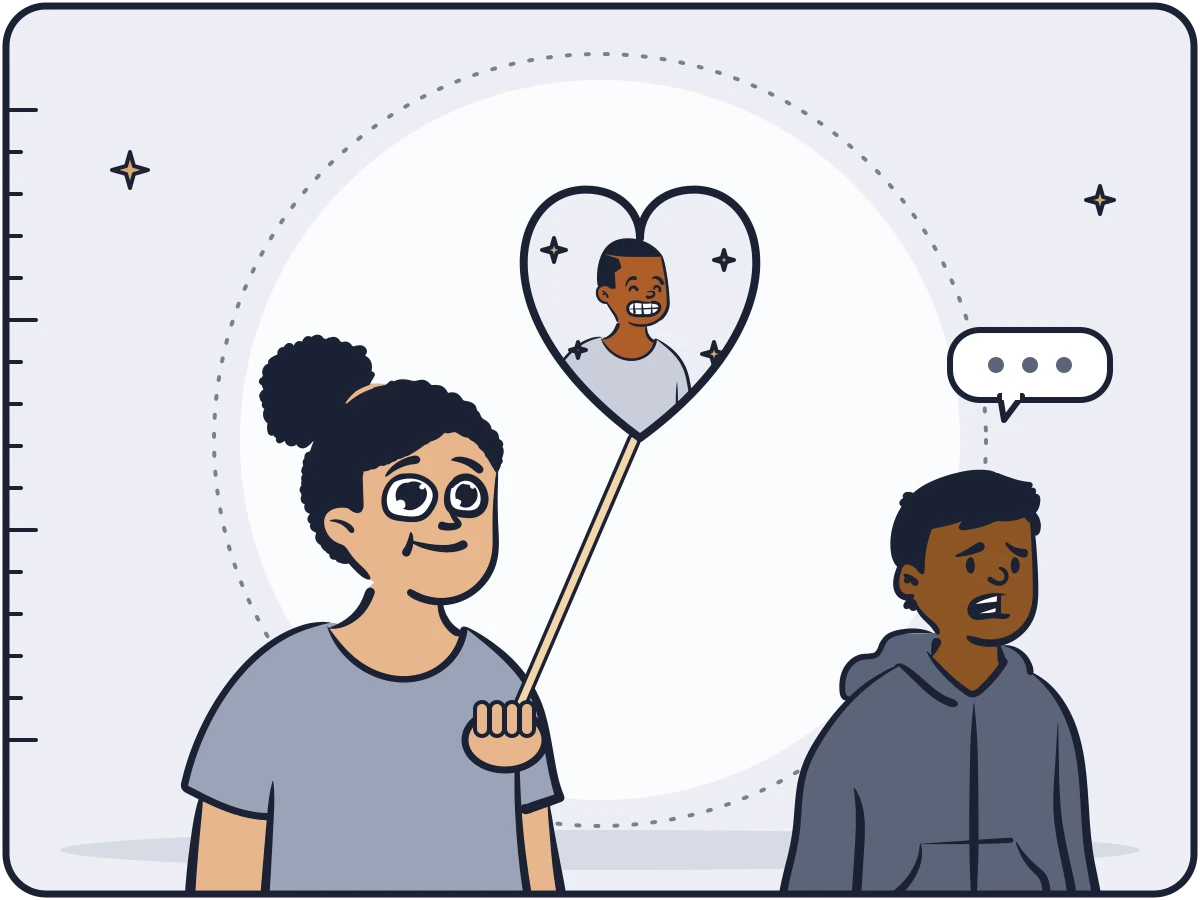
Ana is 25 and three weeks into seeing Theo. She is certain she has known him for years. Then he takes a day to answer a text, and the floor drops out. By evening she has worked out what kind of person he is, what he thinks of her, and where this is going.
Carl Jung is quoted on love all the time, mostly on cards with no source. This page sets out what he wrote: the line about love and power, what he said about falling in love, his essay on marriage with its dated parts flagged, and a late page about not understanding it. It gives no relationship advice as his. To see how you describe yourself first, the test is a short set of everyday scenes.
What did Jung actually say about love?
Jung never wrote a theory of love. He left three things worth reading: a sentence about love and the will to power (CW 7 §78), an essay on marriage (CW 17 §§324-345) that is partly sharp and partly dated, and a late page where he says he has never been able to explain what love is.
Everything else with his name on it in a love-quote search needs checking. We could not find some of the best-known lines in the Collected Works volumes we could search or in Memories, Dreams, Reflections, such as “I cannot love anyone if I hate myself”.
What does "where love reigns, there is no will to power" mean?
It is real, and it comes from CW 7 §78, in the essay “On the Psychology of the Unconscious” (first published 1917, revised later), in the chapter called “The Other Point of View: The Will to Power”. The translator writes “reigns”; quote cards usually say “rules”.
“Where love reigns, there is no will to power”
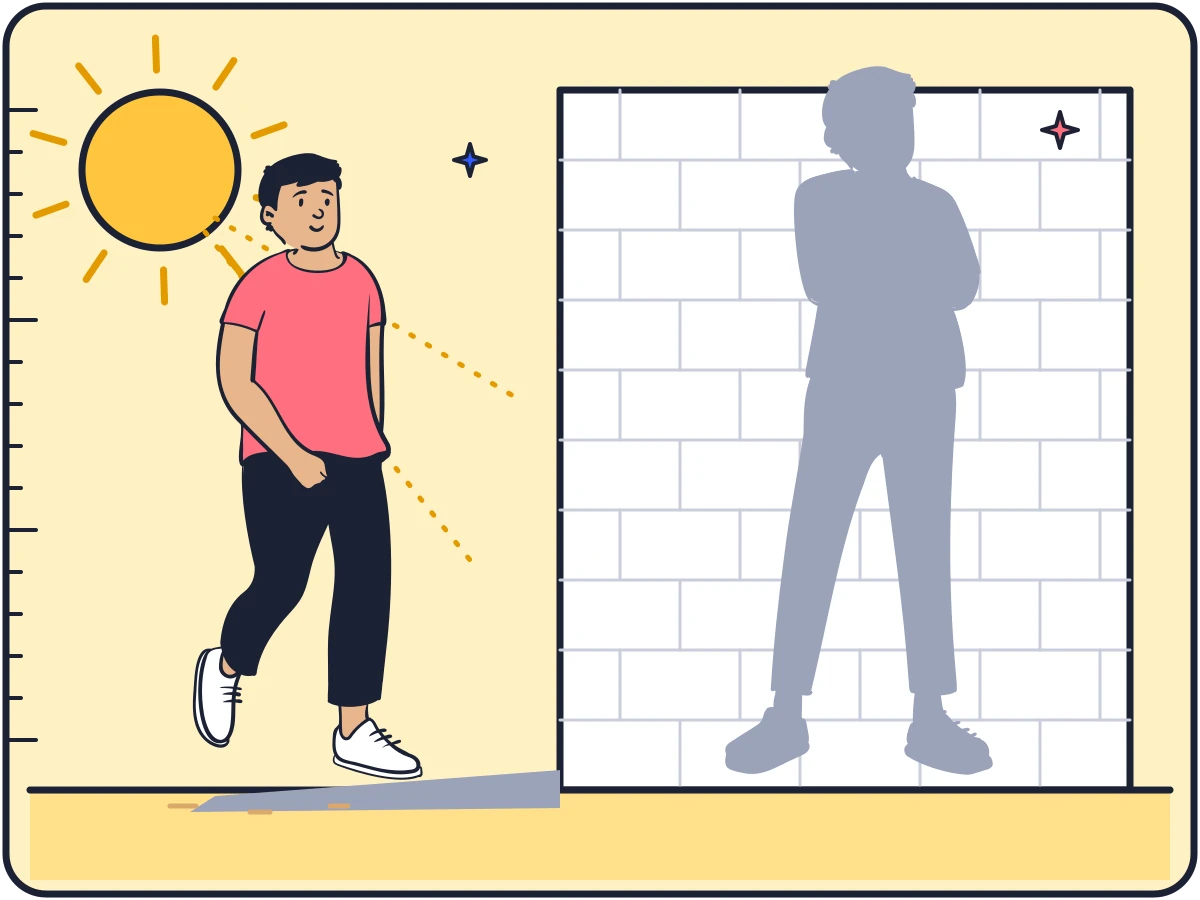
The sentence goes on: where the will to power is paramount, love is lacking, and “the one is but the shadow of the other”. That is the whole of the line, and it is not about couples. Jung is comparing two theories of neurosis, Freud’s, built on Eros (love, desire), and Adler’s, built on the will to power. His point is about opposites: whichever attitude you lean on in your conscious mind, the other tends to sit unnoticed in the shadow, the part of you that you do not see or do not accept.
He even says that, psychologically, the opposite of love is not hate but the will to power. That is what makes the line interesting. In Jung’s reading, the person who sees themselves as all warmth and no ego may have a hunger to win that they have not looked at. And the person who has to be in charge may be starved of tenderness.
Jung presents compensation by opposites as something he saw in his clinical work. It is a hypothesis, not a measured law. Treat the line as a prompt to ask a question of your own behaviour, not a rule about other people.
Why does falling in love feel so certain so fast?
Jung gave one answer in his marriage essay. Young people, he says, act from motives that are mostly unconscious, and they think themselves “very conscious and knowing”, because we constantly overestimate what we are conscious of (CW 17 §327). The less you know of your own motives, the less a choice is really free, and he points to “the fatal compulsion one feels so acutely when one is in love” as the sign of it.
His explanation runs through projection: you cast an inner image onto a real person and then meet it as if it were theirs. Jung calls this image, in a man or a woman, the anima or animus and treats it as inherited. That machinery is his hypothesis, and parts of how he states it are dated, so we leave it aside. What survives is a plain observation about the first weeks.
He warns that the projection “should on no account” be taken for a conscious, individual relationship, because it creates a compulsive dependence built on unconscious motives (CW 17 §341). He is not cynical about it, either. The image can land on a person of real worth, and it can help both, but more often it ends in illusion, and he warns optimists against “blinding fantasies” (CW 17 §340).
Back to Ana. At week three, her certainty about Theo is probably a mix of what she has seen and what she brought with her. Neither half is bad, and the useful move is to know which is which. Jung’s idea of projection explains how to spot the difference.
What did Jung write about marriage?
“Marriage as a Psychological Relationship” began as a 1925 contribution to a book on marriage, and it is in CW 17 as part of the volume on personality. Early on it sets a rule: a psychological relationship needs consciousness, and there is none between two people who are in a state of unconsciousness (CW 17 §325). Relationship, he says, requires that you can tell yourself apart from the other person.
His best-known idea is the “container” and the “contained”. One partner lives wholly inside the marriage and feels held. The other, more divided inside, feels outside it, looking for completion. The more the first one clings, the further out the other feels, and around midlife he says this tends to break open (CW 17 §§332-335).
The way out he describes is the part worth keeping. Each partner finds that the security or wholeness they were demanding from the other is something they have to find in themselves (CW 17 §§333-334). That is a claim about what love can and cannot supply, and it can be tested against your own experience.
What did Jung say about love near the end of his life?
In “Late Thoughts”, one of the chapters Jung wrote himself for Memories, Dreams, Reflections, he turns to Eros, the Greek god of love, and admits defeat. He says he falters before the task of finding language for “the incalculable paradoxes of love”, and that in his medical work and in his own life he has “never been able to explain what it is”.
He then quotes a line from the New Testament: love “bears all things” and “endures all things” (1 Corinthians 13:7). Of those words he says that they “say all there is to be said”. He adds that he does not use “love” for desiring, preferring or wishing, but for something larger than the individual, in which we are caught up.
That is more religious than a lot of his clinical writing, and we leave the large claims alone. What is useful for a 25-year-old is the honesty. The man who wrote the Collected Works on projection, power and marriage says that, in the end, he cannot account for it.
Which Jung love quotes are real?
| The line | What we found |
|---|---|
| "Where love rules, there is no will to power" | Real, with “reigns” in the Hull text. CW 7 §78. About two theories of neurosis and the shadow, not about couples. |
| "The kernel of all jealousy is lack of love" | Real, in Memories, Dreams, Reflections, chapter “Psychiatric Activities”. It is an aside about one patient’s wife, not a theory of jealousy. |
| "I cannot love anyone if I hate myself" | We did not find it in the Collected Works volumes we could search, or in Memories, Dreams, Reflections. We do not use it. |
| "The opposite of love is hate" | Jung grants that logically it is, then says psychologically love’s opposite is the will to power (CW 7 §78). |
| "Falling in love is projection" | A simplification. He treats projection as the start, says the image can land on someone of real worth, and warns against both cynicism and fantasy (CW 17 §340). |
What can you take from this without turning it into advice?
Jung gave no advice for dating or breakups, and nothing here should be read as his. These are three questions that his passages make easy to ask. They sit alongside, not in place of, what the people in your life tell you.
- Facts versus certainty. List three things you have actually seen the other person do, and three things you have assumed about them. Notice how much of the picture is the second list (CW 17 §327).
- Who is trying to win? In your last argument, was it about the thing, or about who would be right? Jung’s line is a prompt to look at the power side, especially when you feel like the nice one (CW 7 §78).
- What am I asking them to supply? If a feeling of safety or completeness is what you want from a partner, ask whether any of it could start with you. Jung’s marriage essay turns on that move (CW 17 §§333-334).
If a relationship is hurting you, or a breakup feels too heavy to carry, a doctor, counsellor or someone you trust is the right person to talk to. This page is about what Jung wrote and is not a guide to your relationship.
Quick answers on Jung and love
Did Jung think love is just projection?
No. He treated projection as a common start to romantic attraction and said the image can land on someone worth it (CW 17 §340). He also said a relationship between individuals only starts once the unconscious motives are recognised (CW 17 §331).
Is there a Jungian test for compatibility?
Not from Jung. He did not write one. Our test asks how you describe yourself across Jung’s four functions and says nothing about who suits you. The method page explains what it can and cannot do.
Sources
- C. G. Jung, Two Essays on Analytical Psychology (Collected Works vol. 7, Hull translation), “On the Psychology of the Unconscious”, §78
- C. G. Jung, “Marriage as a Psychological Relationship” (1925), in The Development of Personality (CW 17), §§324-345
- C. G. Jung, Memories, Dreams, Reflections, recorded and edited by Aniela Jaffé, translated by Richard and Clara Winston (Vintage, revised edition): chapters “Late Thoughts” and “Psychiatric Activities”