Individuation: What Jung Meant, and Why He Did Not Call It Self-Improvement
A lifelong process of becoming a separate person, and Jung's warnings about who should try it
10 min read · Updated 27 November 2026
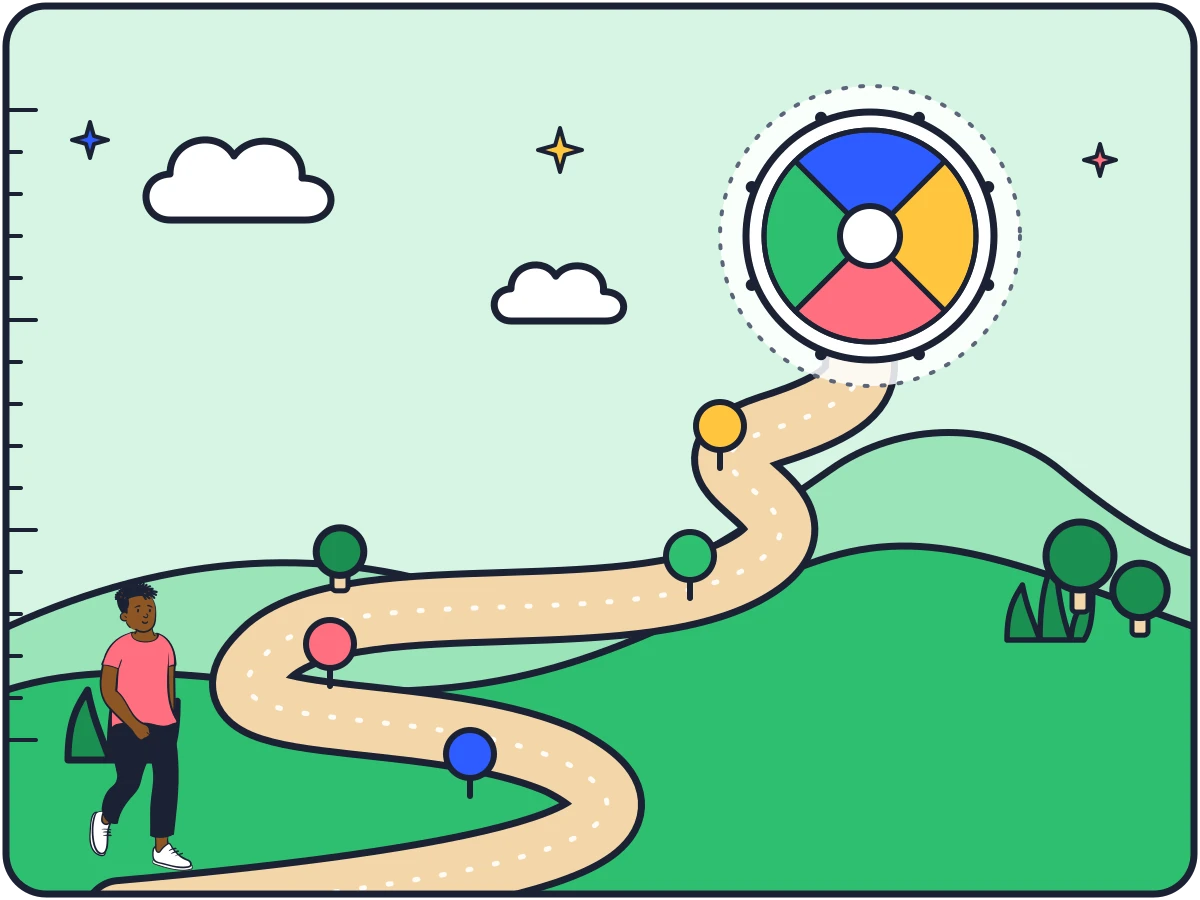
Online, individuation is often sold as a plan for becoming your best self: steps to follow, stages to reach. Carl Jung wrote almost the opposite. He said it cannot be given as a recipe, that nobody takes it up because somebody says it would be useful, and that it is risky.
This page lays out what he meant, using his own paragraphs from the Collected Works. It covers what individuation is, what it is not, the order he described, the dangers he named, and the small, honest things an ordinary reader can take from it. If you want to see how you describe yourself in everyday scenes first, the test is the place to start.
What does individuation mean in Jung's psychology?
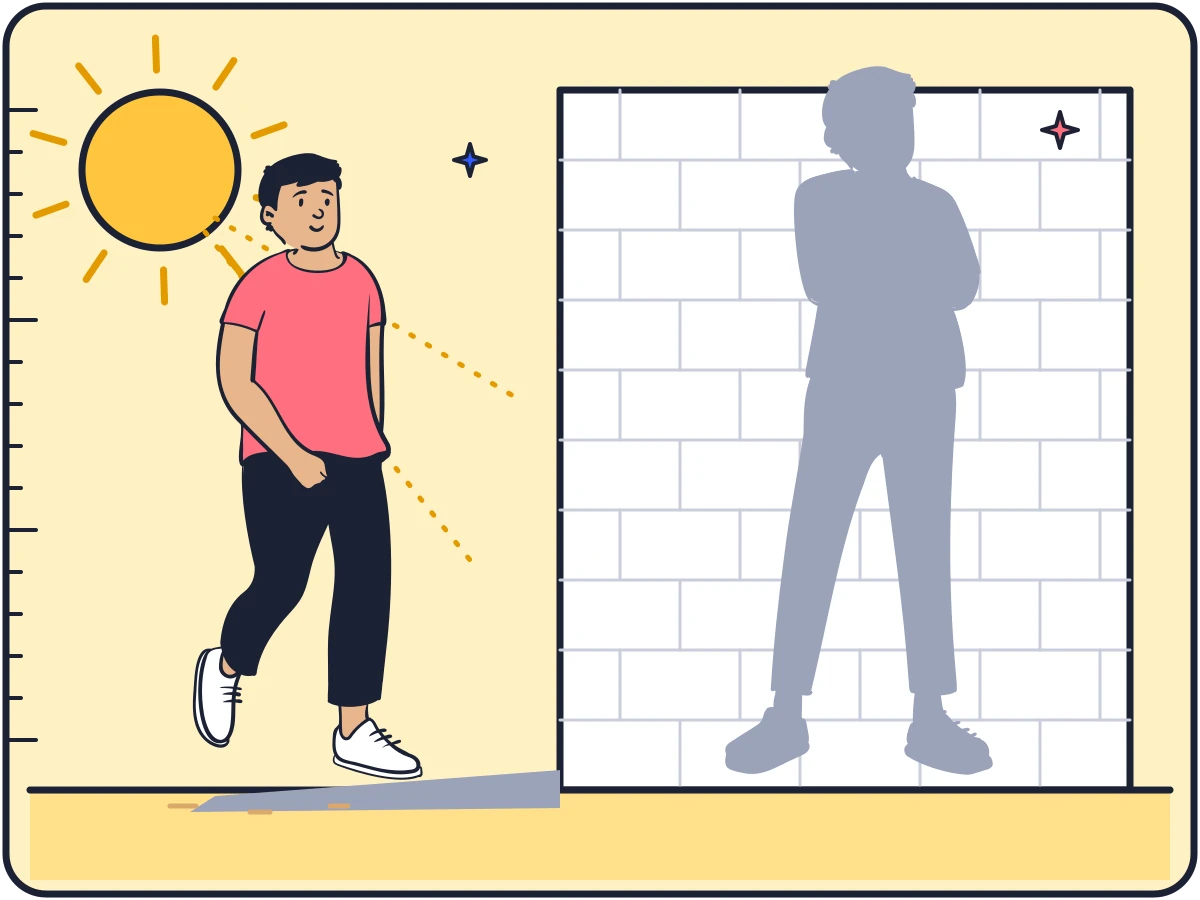
Individuation is Jung’s word for the lifelong process of becoming a separate, whole person. In the plainest version, it means becoming an “in-dividual”: someone who is not just a copy of their family, their group or their role.
“a separate, indivisible unity or ‘whole’”
The start of the process, in Jung’s account, is a kind of fusion. In his 1921 definitions he says individuation is practically the same as the development of consciousness out of an original state of identity (CW 6 §762). A child begins mixed up with parents and surroundings, and you can stay mixed up well into adulthood without noticing.
Individuation means gradually sorting out what is yours and what you picked up. Which opinions did you choose? Which fears are your own? Which ambitions came from someone else’s expectations?
Jung added a second idea. The psyche, he said, has two uneven halves, the conscious and the unconscious, and they do not make a whole when one of them is suppressed or injured by the other. If they must contend, he wrote, let it be “a fair fight with equal rights” (CW 9i §§520-522). The unconscious here means what you are not aware of but that still moves you.
He was clear about the limits of describing it. How the two sides are to be brought together, he wrote, cannot be given in the form of a recipe (CW 9i §524).
What is individuation not?
Three things get mixed up with it. Jung corrected all three.
It is not individualism
Individualism, Jung said, means deliberately stressing some supposed peculiarity over collective duties. Individuation is nearly the reverse: the better and more complete fulfilment of the collective qualities of the human being (CW 7 §267). He called individualism an unnatural usurpation, a freakish and impertinent pose (CW 17 §292).
So being quirky or contrarian is not individuation. Dyeing your hair, quitting social media or deciding you are not like other people is not what he meant.
It is not for geniuses or special people
Becoming a personality, he wrote, is not the exclusive privilege of the genius (CW 17 §307). That cuts both ways. It is not a prize for the gifted, and it is not a status.
It is not a self-improvement programme
The popular framing of “becoming your best self” leaves out something Jung made central: necessity. He wrote that no one develops their personality because somebody tells them it would be useful.
“no one develops his personality because somebody tells him that it would be useful”
| Compared on | Individuation (Jung) | Individualism | Self-improvement |
|---|---|---|---|
| What it is about | Becoming a whole, separate person | Stressing how you differ | Getting better at something, such as habits or output |
| Who drives it | Inner necessity, not advice (CW 17 §293) | Choice, often for effect | Goals you set |
| Relation to other people | Fuller connection, though it can feel isolating (see below) | Distance as a style | Not the point |
| Can it be reduced to steps | No (CW 9i §524) | Not applicable | Usually yes |
Does individuation mean being alone?
The text pulls in two directions, and the honest answer is to give both.
In Psychological Types Jung wrote that the process must lead to more intense and broader relationships with others, not to isolation (CW 6 §758). In another essay, though, he wrote that growing into a personality means separating oneself from the undifferentiated herd, and that this feels like isolation, with “no more comforting word for it” (CW 17 §294).
He pulled back from the extreme reading. Individuation is not the life of a hermit, and “fantasies are no substitute for living” (CW 7 §369). One way to hold both, and this is our reading rather than his wording, is as a temporary feeling. You may feel more alone as you stop going along with things automatically, and the aim is to relate better afterwards.
Think of someone who realises at 25 that every career choice so far was made to keep their parents calm. Saying so can feel lonely for a while. The idea behind CW 6 §758 is that such a person can end up in more honest contact with those same parents, not in less contact with everyone.
Why did Jung say most people should not attempt it?
This is the part most online summaries drop. Jung spoke of the deeper process in terms that sound very unlike a lifestyle plan.
About the inner techniques he used with some patients, he wrote that he was not recommending them as necessary or even useful to anyone not driven to it by necessity (CW 7 §324). For many people it would be, in his words, “a disastrously wrong turning”, and he said he would be the first to hold them back (CW 7 §369).
He also thought few people actually walk the whole way, and those that do go only from inner necessity, “not to say suffering” (CW 7 §401). A person will submit to this kind of inner humiliation, he wrote, only if forced (CW 7 §325).
“not driven to it by necessity”
Adaptation comes first. In his 1921 definitions he says the aim of adapting to the necessary minimum of collective norms must be reached before individuation can be taken as a goal (CW 6 §760). That is relevant if you are in your twenties and feel guilty for caring about a job, a salary and a place to live. Jung would not call that a distraction from your development.
Related to this is Jung’s essay on the stages of life. He wrote that the afternoon of life cannot follow the programme of the morning (CW 8 §784), and he saw this deeper work as mostly belonging to later life. The stages of life article goes through that essay. If you are asking whether feeling lost in your twenties means you are individuating, our article on feeling lost in your 20s gives the short answer: not necessarily.
What order did Jung describe?
Jung described a sequence, drawn from his clinical work and not from a study of healthy people. It is useful as a map of ideas, and it is not a to-do list.
- The persona. First, you see the social role as a role and not as you. The persona article covers this stage (CW 7 §§243-265).
- The shadow. Then you meet what the role left out. Jung called this the “apprentice-piece” (CW 9i §61), and said that integrating it marks the first stage of the analytic process (CW 9ii §42). The shadow article explains it.
- Inner figures of relationship. Next come the inner figures he called anima and animus. We leave them out here, because his account of them is tied to the ideas about gender of his time.
- The temptation to be a guide. After insight, he warned of a new inflation, in which a person begins to see themselves as a wise authority (CW 7 §§374-393).
- A new centre. Finally, he described a shift in which the centre of the personality no longer sits in the ego but at a point between the conscious and the unconscious (CW 7 §365). He called this a psychological concept, a construct (CW 7 §399).
Be careful with the order. Jung himself was hesitant about calling unconscious processes a planned sequence (CW 7 §386). Marie-Louise von Franz, one of his closest followers, later gave a popular three-step version for general readers. That is her summary, not Jung’s text.
What dangers did Jung name?
Jung did not describe individuation as gentle. He listed ways it goes wrong, and they are worth knowing even if you never go near the deeper process.
Inflation, up and down
Inflation is a swelling of your self-image, in our plain words. Jung saw it as the most ordinary hazard, and it can come from simply learning something about yourself.
After an insight, he wrote, some people become “full of themselves” and others are crushed (CW 7 §§221-227).
The confident one is often hiding a sense of impotence. The crushed one can nurse a hidden pride, and is sensitive to the slightest disapproval. Both, he said, are inflation, going in opposite directions. He also noted that a new bit of knowledge can seize a weak head so firmly that nothing else is seen or heard (CW 7 §243, note 1).
A scene. Dev reads an article about projection and spends a week telling everyone what they are projecting. He has not looked at himself once. That is the first kind.
After a bad day he decides he is hopeless, a hypocrite who knows all this and still does it. That is the second kind, and it is the same coin.
Jung said the remedies differ (CW 9ii §47). If you have been overwhelmed, patience and attention to ordinary duties help. If you have been explaining everything away, he said the presumption can only be brought down by a moral defeat. A sign von Franz named, in a book for general readers, is the loss of “one’s sense of humor and of human contacts”.
Possession and overload
He also warned about being taken over by a powerful image. It turns a person, he said, into a flat collective figure (CW 7 §390). And he wrote that if the unconscious rides roughshod over the conscious mind, a psychotic condition can develop (CW 7 §253). In the essay on the transcendent function he cautioned that a freed unconscious can overwhelm the ego (CW 8 §183).
What can an ordinary reader take from it?
Quite a lot of Jung’s idea can be used without any of the risky parts. Here are three modest things that match what he actually wrote.
- Notice what is borrowed. Jung gave the aim of this work as being able to say “As I am, so I act” (CW 7 §373). A small version: when you say “I should”, ask whose voice that is.
- Adapt first, and without guilt. Building a working life is the task of this stage (CW 6 §760). Nothing in Jung says you must skip it.
- Be suspicious of your own insight. After a clever realisation about yourself, check whether you are using it to feel superior or to feel hopeless. Both are the same swing (CW 7 §§221-227).
That is it. Notice, adapt and keep an eye on inflation.
Jung would add that the bigger process is not something you can order for yourself. He also wrote that an analyst who loads a patient with “you should” and “you must” only adds to the collective pressure the patient is already under (CW 10 §534). The same goes for self-help writers, ourselves included.
What does our test do, and what does it not do?
It does not tell you where you are in individuation, and no honest test could. Jung wrote that self-knowledge cannot be based on theoretical assumptions (CW 10 §495), and a list of stages is exactly that.
What the test does is show a ranking of Jung’s four functions from how you describe yourself in short everyday scenes, along with a few notes about how that tends to look in practice. Think of it as a mirror, not a map. It reflects how you describe yourself, and it cannot show you the unconscious. The method page explains the scoring, and where Jung stops lists what we left out of his theory on purpose.
Questions people ask
What is the difference between individuation and individualism?
Individualism emphasises how you differ. Individuation, in Jung’s account, is the fuller realisation of what you share with other people (CW 7 §267). One is a pose, the other a process.
Is individuation ever finished?
Jung did not describe an end point. He called a complete personality an unattainable ideal, with ideals serving only as signposts (CW 17 §291). Thinking you have finished is a likely sign of inflation.
Is individuation the same as maturity?
Jung never equated them. Ordinary maturity, meaning a working adaptation to the world, comes first in his account (CW 6 §760). Individuation names something rarer that he believed only some people are driven toward.
How do I start?
Jung gives no recipe (CW 9i §524), and he said it begins from necessity and not advice (CW 17 §293). If you are asking because of curiosity, the reflections above are enough. If you are asking because something is heavy, a professional is a better start than a framework.
Sources
- C. G. Jung, Psychological Types (Collected Works vol. 6, Hull translation), definition of “Individuation” and “Self”, §§758, 760, 762
- C. G. Jung, Two Essays on Analytical Psychology (CW 7), §§221-227, 243-267, 324-325, 365, 369, 373-393, 399, 401
- C. G. Jung, The Structure and Dynamics of the Psyche (CW 8), “The Stages of Life” §784 and “The Transcendent Function” §§165, 183
- C. G. Jung, The Archetypes and the Collective Unconscious (CW 9 part 1), §§61, 490, 520-524
- C. G. Jung, Aion (CW 9 part 2), §§42, 44-47
- C. G. Jung, Civilization in Transition (CW 10), “The Undiscovered Self” §§495, 534
- C. G. Jung, The Development of Personality (CW 17), §§291-294, 307
- Marie-Louise von Franz, “The Process of Individuation”, in C. G. Jung (ed.), Man and His Symbols (1964)