What Is the Transcendent Function in Jung's Psychology?
When you are torn between two options, Jung's idea that the tension itself can produce something new
8 min read · Updated 28 November 2026
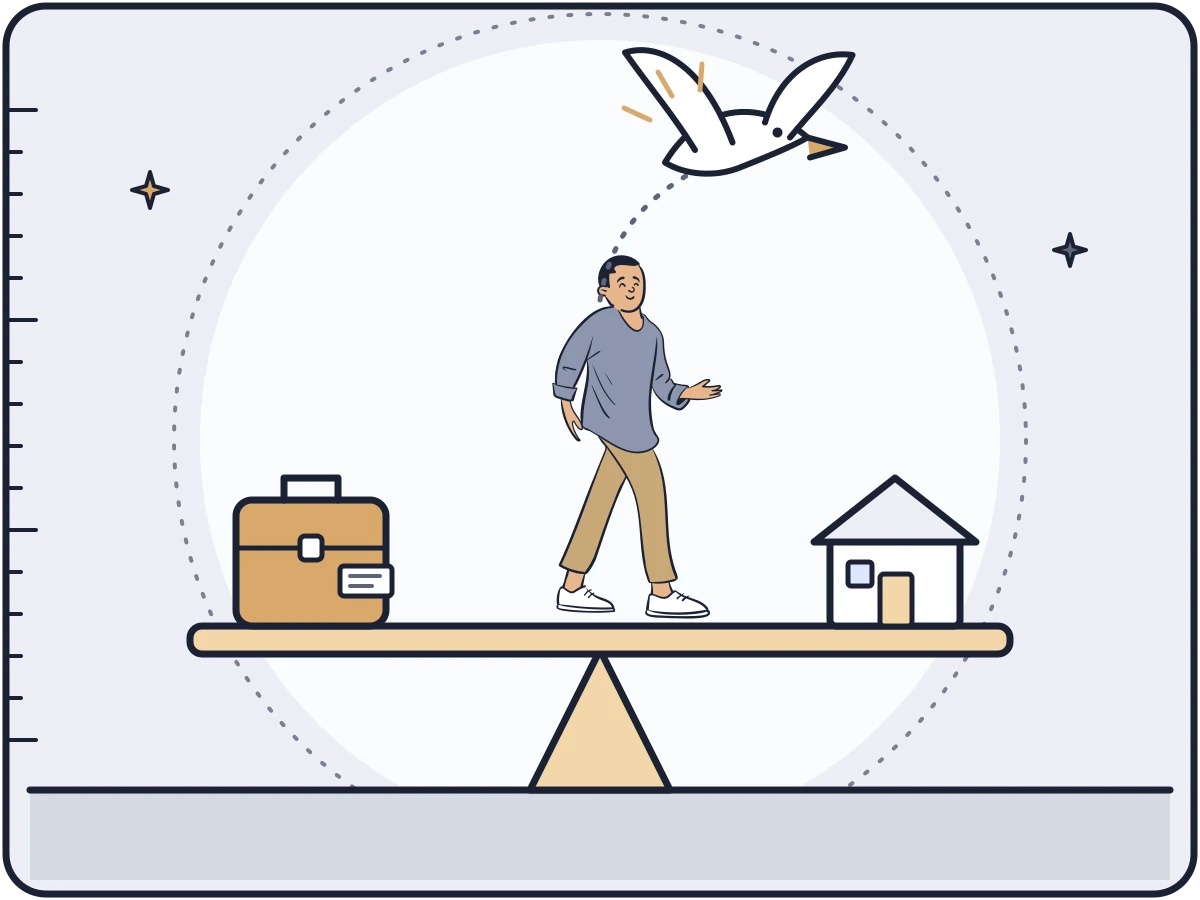
Nadia, 26, has until Friday to answer a job offer in another city. Staying means her friends, her flat and a promotion that is nearly hers. Going means a bigger role and a life she cannot picture. She has made four pro and con lists, and on Wednesday night she catches herself hoping a coin toss will tell her what she wants.
Carl Jung had a name for what happens, or fails to happen, in a moment like this: the transcendent function. This page explains what he meant, in his own words with paragraph numbers, where his idea stops and where ours begins, and one plain way to try it. For a rough picture of how you tend to decide, our test is a short place to start.
What is the transcendent function?
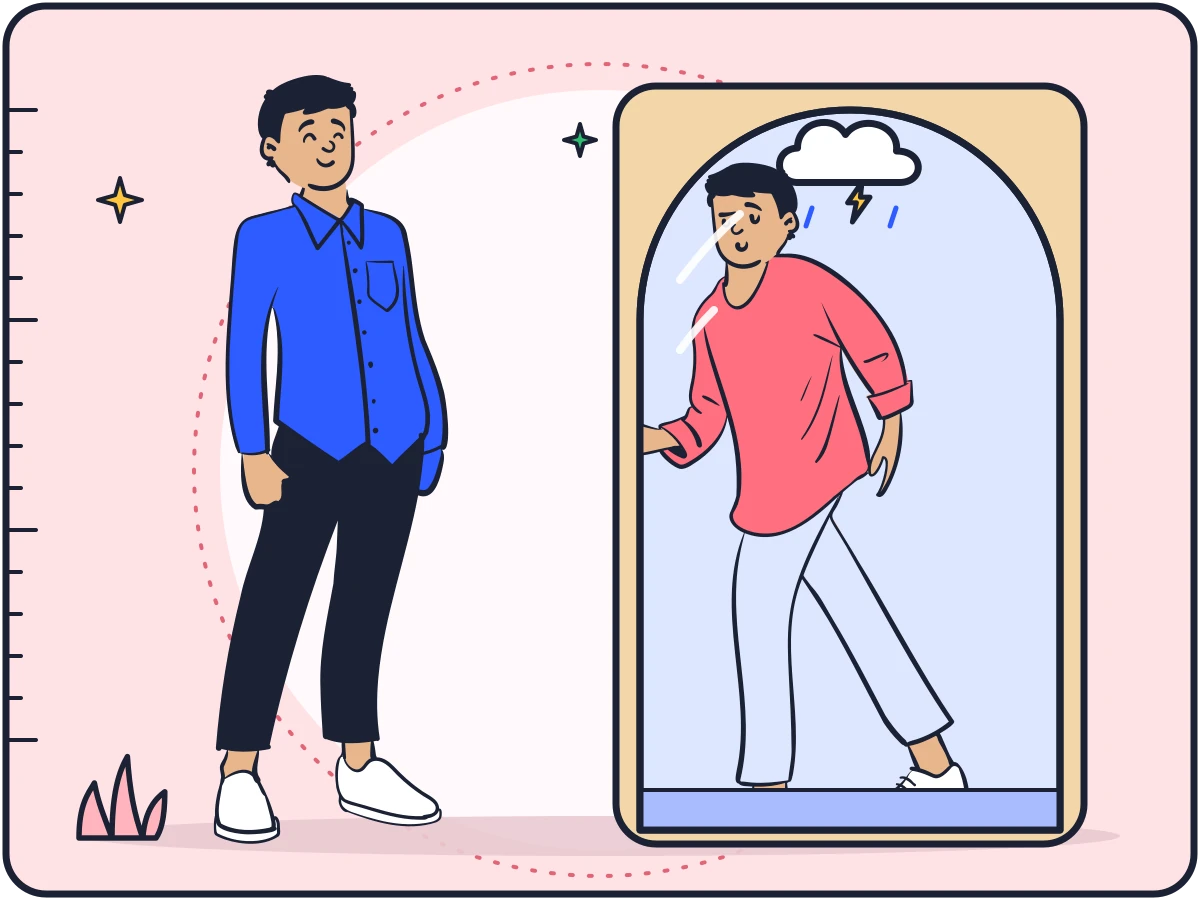
It is Jung’s name for the way a new attitude can arise when two opposed positions are both taken seriously and held against each other. In his essay the two positions are the conscious mind and the unconscious, and the result is a third thing that neither side had on its own.
Start with what it is not. He opens the essay by saying there is nothing mysterious or metaphysical about the term, and that it is called a function in the way a mathematical function is, by analogy with one that combines real and imaginary numbers (CW 8 §131). The maths is only a comparison.
“makes the transition from one attitude to another organically possible”
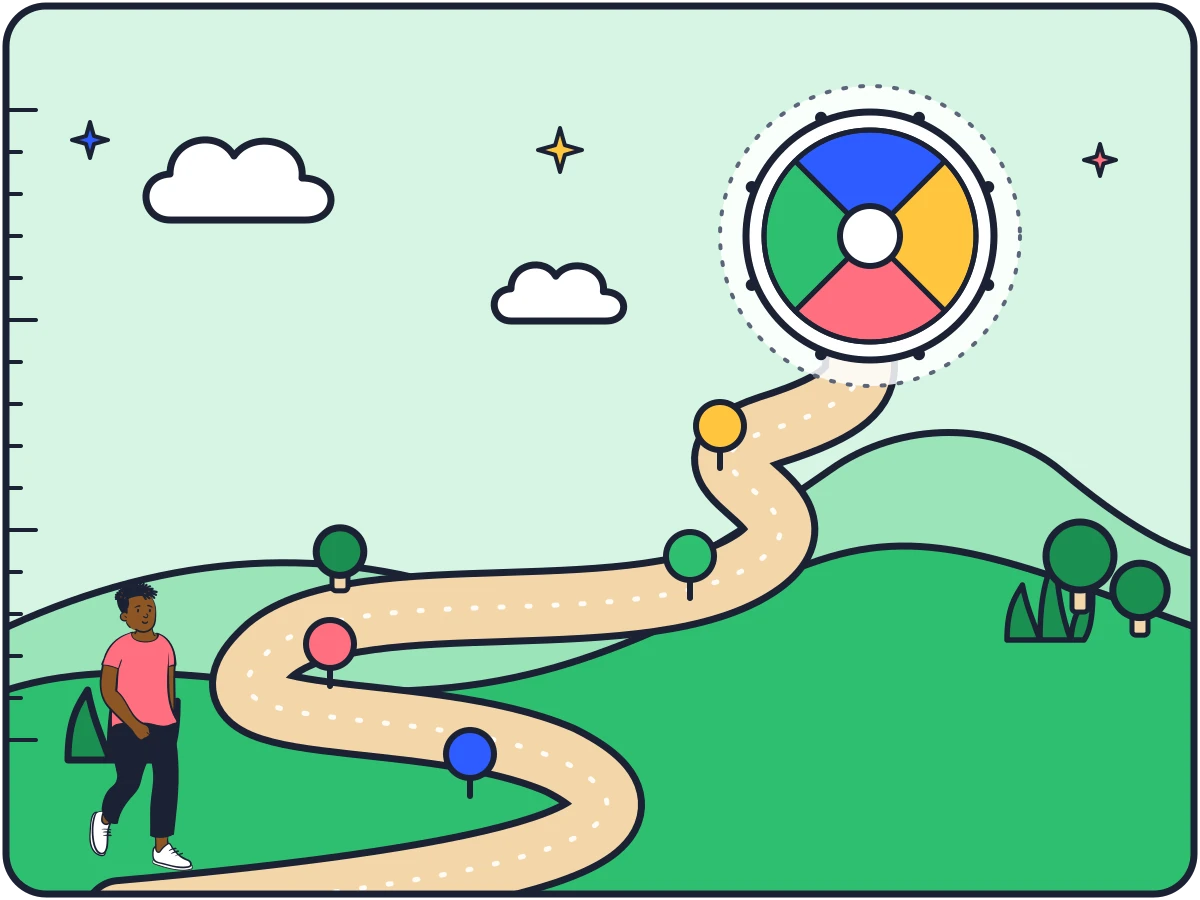
That is why it is “transcendent”: it carries you across from one way of seeing things to another, without throwing away the part you were ignoring (CW 8 §145). Jung wrote the essay in 1916, left it in his files, and it was first published in 1957 (editors’ note, CW 8).
The IAAP’s short article by the Jungian analyst Emilija Kiehl describes it as a core idea in Jung’s model of how change happens, and notes that clinicians still revise the concept.
Why does Jung say we need a third thing at all?
Because deciding is one-sided by nature. Jung’s argument is that conscious life has to be directed, and direction means picking one path and excluding the rest. That choice is made by judgment, and the judgment rests on what we already know, not on what is new (CW 8 §136).
“One-sidedness is an unavoidable and necessary characteristic of the directed process”
He added that the excluded side does not vanish. If one-sidedness grows, the counter-tendency breaks through, often just when it is most awkward. His example is the speaker who makes a slip of the tongue exactly when he most wants to say nothing stupid (CW 8 §138).
Look at Nadia’s lists. They all use one lens, which is career, and anything that does not fit it gets filed as irrational. Jung warned about this too: whatever seems unreasonable to us is doomed to be excluded for that reason alone, even if it only looks irrational from where we stand (CW 8 §137).
Notice what he does not say. He does not say the excluded side is always right. He says it is not nothing.
How does holding two opposites make something new?
Jung describes two steps. First, the unconscious side is given a shape, so the person can see it. Second, and he calls this the more important stage, the ego brings the two positions together, “the bringing together of opposites for the production of a third” (CW 8 §181). At this stage the ego takes the lead, not the unconscious.
The rule for the second step is fairness. The ego’s position must count as being of equal value to the counter-position, and the other side is to be heard, audiatur et altera pars (CW 8 §§183, 185). Taking it seriously, he wrote, does not mean taking it literally (CW 8 §184).
“creates a living, third thing”
In that passage Jung says the confrontation generates a tension charged with energy, and that what comes out is not a logical compromise but a movement out of the suspension between opposites. So long as the two sides are kept apart to avoid conflict, they stay inert (CW 8 §189).
Two plain points follow. The third thing is not splitting the difference: it is a new position that neither side could have named at the start. And it takes time, as Kiehl’s article says: when the tension is held, it can produce a new uniting function that moves the person forward.
Does the transcendent function help when you are torn between two options?
Partly, and we should be honest about the stretch. Jung’s two opposites were the conscious attitude and the unconscious counter-position, and his method for reaching the unconscious was a way of working with fantasy that he called active imagination. We do not teach that here, and Jung himself wrote in a late note, dated 1958, that it should, if possible, not be employed except under expert supervision.
What carries over to a real decision is narrower. You take the other side seriously instead of outvoting it (CW 8 §184). You let the ego, meaning you, keep the lead (CW 8 §181). And you accept that the first answer may be a longer wait than a coin toss.
Jung also wrote that the capacity for inner dialogue is a touchstone for outer objectivity (CW 8 §187). Treat that as the test of whether you are really listening to the side you did not pick.
Here are five days for Nadia, in plain steps, after she asks the company for a few more days. It is our adaptation of those two ideas, and not Jung’s method.
- Day 1. Write the best case for going, in a paragraph, as if you were its advocate. Do not mention staying.
- Day 2. Do the same for staying, in the same length. Do not mention going.
- Day 3. Read both. Notice which was easier to write, and which is made of “should” and which of “want”.
- Day 4. Do ordinary things and keep a note of any thought about the decision that arrives unasked: a third option, a reason you had not said out loud.
- Day 5. Test one thing in real life. A question you avoided, such as whether the start date could move or whether you could visit first.
If Nadia notices she wants the role more than the city, that is a third position. If she asks for a later start and gets it, so is that. If a vivid or upsetting feeling shows up, that is a cue to stop and talk to someone you trust. This is a way of thinking a decision through, and it does not replace advice from a professional about something heavy.
What is enantiodromia, and how does it relate?
Enantiodromia is a Greek-derived word for a running counter to. Jung took it from Heraclitus, who used it for the idea that everything turns into its opposite. His own definition is the emergence of the unconscious opposite in the course of time (CW 6 §709).
He said it practically always occurs when an extreme, one-sided tendency dominates conscious life. In time an equally powerful counterposition builds up, first holding back the conscious performance and then breaking through it (CW 6 §709).
Think of someone who says yes to every request for two years, then abruptly cancels everything and goes silent. Jung’s reading would be that the one-sided attitude fed its own opposite. That is his hypothesis from case material. We are not aware of it being tested as a law, and the timing is not predictable.
The link to the transcendent function is simple. Enantiodromia is what can happen when the other side is ignored for long enough (CW 8 §138). The transcendent function is Jung’s name for meeting it sooner and on better terms.
What did Jung warn about?
A fair amount. He wrote that a liberated unconscious can push the ego aside and overwhelm it, as the ego once suppressed the unconscious (CW 8 §183). In the prefatory note he called his method “not a plaything for children”, and in the essay itself he describes the suitably trained analyst as the one who helps the patient bring the two sides together (CW 8 §146).
He also did not think there was a single cure. Analysis, he wrote, is no once-and-for-all fix, because life has to be tackled anew (CW 8 §142). The same applies to a decision: one good week does not settle the next one.
Treat this page as an idea to think with. If a decision, or the feeling behind it, is heavy or keeps returning, a professional is the right person to talk to.
What do people get wrong about the transcendent function?
| The popular line | What Jung wrote |
|---|---|
| "It is a mystical power" | He says there is nothing mysterious or metaphysical about the term (CW 8 §131). |
| "It is a mathematical function" | He compares it to one in a single sentence. It is a psychological idea (CW 8 §131). |
| "The answer is the middle path" | The result is a living third thing, not a logical compromise (CW 8 §189). |
| "Let your unconscious decide" | The ego must keep its position and take the initiative (CW 8 §§181, 183, 188). |
| "It is a technique you can run this week" | He wrote that the method he describes should, if possible, not be used without expert supervision (prefatory note, CW 8). |
| "It solves the problem for good" | Analysis is no once-and-for-all cure, and life has to be tackled anew (CW 8 §142). |
More questions about the transcendent function
Is the transcendent function the same as individuation?
Kiehl links the two: the function moves a person from one attitude to another, and she ties that to becoming oneself. The individuation article covers the larger sequence, and Jung did not claim it was for everyone.
Where did Jung write about it?
In “The Transcendent Function”, an essay written in 1916 and printed in volume 8 of the Collected Works, The Structure and Dynamics of the Psyche, paragraphs 131 to 193. Jeffrey Miller’s book The Transcendent Function (SUNY Press, 2004) is a scholar’s guide.
How does this connect to the four functions?
Jung’s typology also rests on opposites: thinking against feeling, sensation against intuition. The function you lead with leaves its opposite undeveloped, which is the subject of our inferior function article. The transcendent function is a different idea, but it grows from the same view that one-sidedness has a cost.
Sources
- C. G. Jung, The Structure and Dynamics of the Psyche (Collected Works vol. 8, Hull translation), “The Transcendent Function” §§131-193 and prefatory note (1958); editors’ note on first publication
- C. G. Jung, Psychological Types (CW 6), definition 18 “Enantiodromia” §§708-709
- Emilija Kiehl, “The Transcendent Function: Vehicle of Psychic Change”, short articles on analytical psychology, International Association for Analytical Psychology
- Jeffrey C. Miller, The Transcendent Function: Jung’s Model of Psychological Growth through Dialogue with the Unconscious (SUNY Press, 2004)